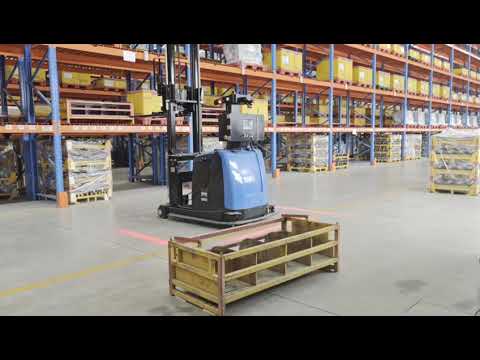
Manufacturing AGV for line-side delivery.
Keep production supplied with predictable line-side delivery, work-in-progress movement and internal pallet circulation. Start with the repeated routes where interruptions cost the most.
Support repeatable routes between buffer zones, line-side areas and internal logistics stations.
Reduce manual intervention on repetitive transport loops that slow production rhythm.
Create more predictable movement patterns in mixed production and logistics environments.
Typical manufacturing automation use cases
Line-side material delivery
Keep production stations supplied with predictable timing and reduce interruptions caused by manual internal transport.
Work-in-progress transfer
Move semi-finished goods between process stages with stable routing and fewer unnecessary touchpoints.
Internal pallet circulation
Handle repeatable pallet movements between warehouse buffers, production cells and outbound staging zones.
Why manufacturing sites adopt AGV transport
More stable production rhythm
- Reduce manual route variability between stations
- Improve line-side replenishment consistency
- Lower disruption risk during shift changes and peak hours
Better coordination between logistics and production
- Make internal transport timing more visible and repeatable
- Support denser operating layouts with clearer movement patterns
- Create a practical base for later smart factory expansion
How to start AGV adoption in manufacturing
Find the most repetitive route
Start from a loop that already consumes labor every shift, such as line-side replenishment or pallet return.
Define pickup and drop logic
Clarify the exact handoff points, buffers and timing requirements before choosing the AGV type.
Match transport type to workflow
Select transport, lifting or narrow-aisle models based on payload, route density and line-side constraints.
Expand to adjacent flows
After the first route is stable, extend to nearby internal transport needs instead of trying to automate everything at once.
Planning AGV deployment for a production site?
Send your payload, route length, pickup-drop method and line-side timing constraints. We can help narrow down the right AGV category and the next implementation questions.